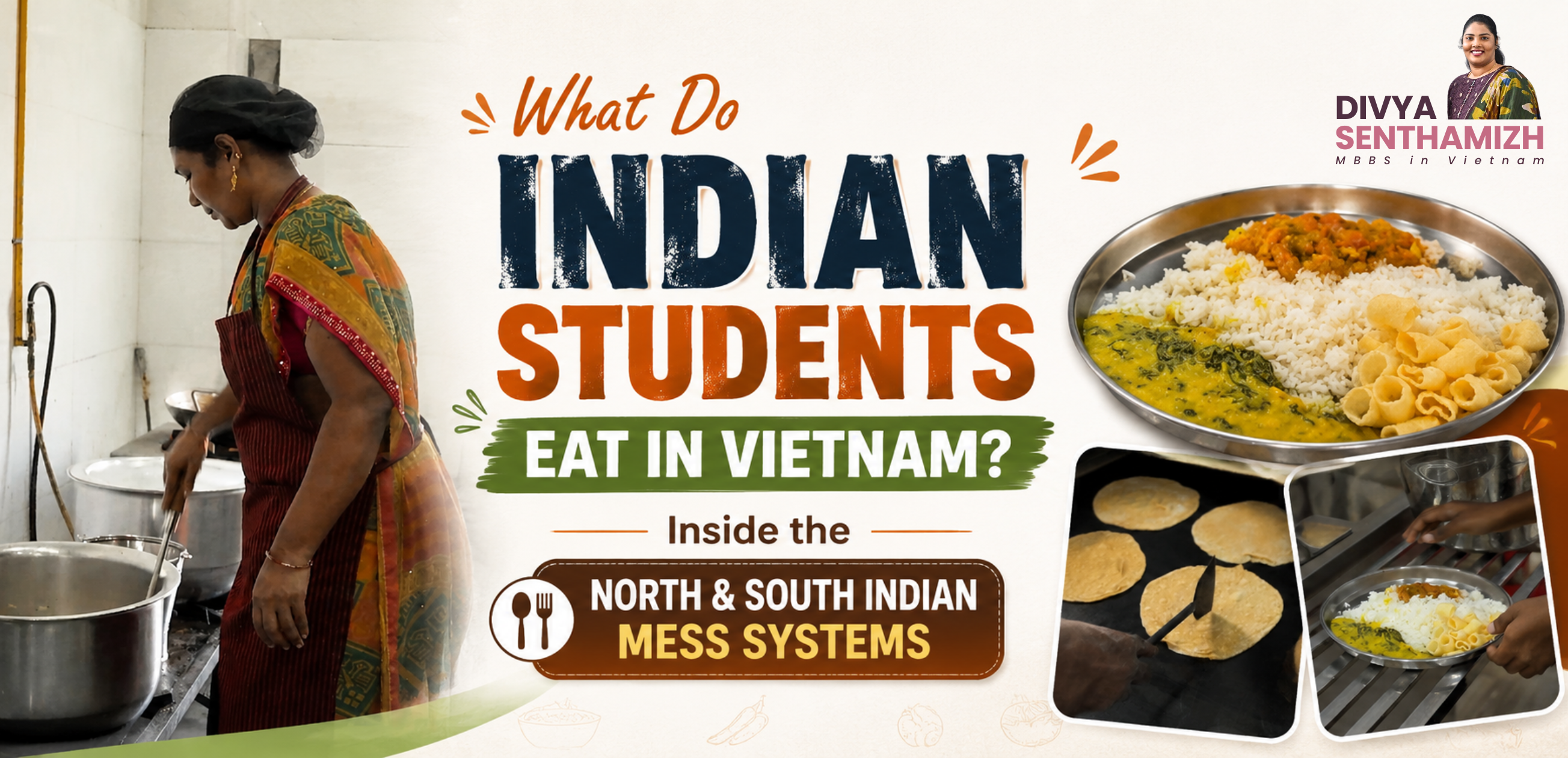
Food is one of the first things Indian parents worry about when their child decides to study MBBS in Vietnam. It’s a valid concern — adjusting to a new country is hard enough without also struggling to find familiar, comforting meals every day. The good news is that Vietnam’s growing Indian student population has led to a genuinely well-developed food ecosystem, complete with dedicated Indian mess facilities, North and South Indian menus, and even homestyle thali options near major university campuses. Here’s a real look at what daily food life actually looks like.
Why This Question Comes Up So Often
Unlike some study-abroad destinations where Indian food is scarce or expensive, cities with a strong concentration of MBBS in Vietnam for Indian students — particularly Hanoi and Ho Chi Minh City — have responded to demand with an entire micro-economy of Indian kitchens, tiffin services, and mess halls. This didn’t happen overnight; it’s grown alongside the steady rise in Indian students choosing to study MBBS in Vietnam over the last several years.
The Indian Mess System: How It Works
Most universities with a significant Indian student population have either an on-campus Indian mess or tie-ups with nearby Indian-run kitchens. These typically operate on a monthly subscription model, similar to what students are used to back home near private and government colleges in India.
A typical mess setup includes:
- Two to three meals a day — breakfast, lunch, and dinner, often with dabba (tiffin) delivery directly to hostels
- Monthly subscription pricing — generally far cheaper than eating out daily, and budget-friendly compared to Indian private college hostel fees
- Rotational weekly menus — designed to avoid repetition, mixing regional dishes across the week
- Hygiene standards familiar to Indian students — many mess operators are run by Indian expatriates who understand exactly what students expect
For students who studied MBBS in Vietnam and now mentor juniors, the mess system is often cited as one of the more pleasant surprises of the transition — far more organized than the informal food arrangements found near some private colleges in India.
North Indian Menu: What’s on the Plate
North Indian mess options are the most commonly available, given the larger proportion of students from Delhi, Punjab, Uttar Pradesh, Bihar, and neighboring states. A typical week might include:
- Roti, dal, and seasonal sabzi as the daily staple
- Rajma-chawal or chole-chawal a few times a week
- Paneer-based dishes on rotation
- Curd, pickle, and papad as regular sides
- Occasional treats like halwa or kheer during festivals
The taste is generally adapted to be close to home-style cooking, since most mess operators are themselves from North Indian backgrounds and cook with imported spices sourced through Indian grocery importers operating in Vietnam.
South Indian Menu: Filling the Gap
South Indian students — particularly from Tamil Nadu, Andhra Pradesh, Telangana, Karnataka, and Kerala — have historically had fewer options abroad, but this has changed significantly in Vietnam over recent years. Dedicated South Indian messes or menu days now commonly include:
- Idli, dosa, and sambar for breakfast
- Rice-based lunches with rasam, curd rice, and vegetable curries
- Filter coffee, a small but meaningful comfort for many South Indian students
- Regional specials rotated in based on the mess operator’s background
Some larger student hubs even have separate North and South Indian mess options entirely, letting students choose based on preference rather than settling for a generalized “Indian” menu that doesn’t quite match their taste.
Grocery Stores and Cooking for Yourself
Not every student relies on a mess. A meaningful portion of Indian students studying MBBS in Vietnam for Indian students eventually shift to self-cooking, especially in shared hostel or apartment setups. This is made possible by:
- Indian grocery stores stocking staples like atta, dal varieties, spices, and pickles, concentrated in cities with larger Indian populations
- Online grocery delivery services that have started catering specifically to the international student community
- Shared cooking arrangements among roommates, splitting grocery costs and cooking duties
Self-cooking tends to become more common in later years, once students are more settled and confident navigating local markets.
What About Local Vietnamese Food?
Most Indian students don’t isolate themselves entirely from Vietnamese cuisine — in fact, many gradually develop a taste for it. Vietnamese food is generally lighter, fresh-ingredient-based, and easy to adapt for vegetarians, with dishes like fresh spring rolls, vegetable pho, and fruit-heavy meals. Over time, a mix of Indian mess meals and occasional local Vietnamese food becomes the norm — comfort food when needed, and cultural exploration on other days.
Addressing the Vegetarian Concern
Vegetarian students often worry the most before making the move. In practice, vegetarian Indian mess options are widely available and, if anything, easier to source consistently than in some private Indian college hostels where menu quality can vary widely. Vietnamese cuisine itself also offers naturally vegetarian-friendly options, particularly with tofu and vegetable-based dishes, giving vegetarian students more variety than they might expect.
Cost Comparison: Mess Life in Vietnam vs. India
One underrated advantage of the Indian mess ecosystem in Vietnam is affordability. Monthly mess subscriptions are typically comparable to, or even cheaper than, hostel mess fees at private Indian medical colleges — while offering comparable or better food quality and variety, given the more organized, business-style operation of most mess providers catering specifically to the international student community.
Final Thoughts
Food is rarely the barrier that families initially fear it will be. Between well-established North and South Indian mess systems, accessible grocery stores, and an increasingly welcoming local food culture, students who study MBBS in Vietnam generally find that daily meals become one of the smoother parts of their transition — not a source of ongoing stress. For parents evaluating the decision, it’s worth knowing that an entire support system has already been built around this exact concern, refined by years of Indian students who came before.